How to Choose the Best Rotary UV Printer for Your Business?
Choosing the right Rotary UV Printer for your business is crucial. A well-chosen printer enhances productivity and quality. The market offers various options, making the selection process overwhelming.
Key considerations play a significant role in your decision. Assess your printing needs and the materials you plan to use. Not all printers are the same. Some may excel in printing on specific surfaces, while others might not meet your expectations.
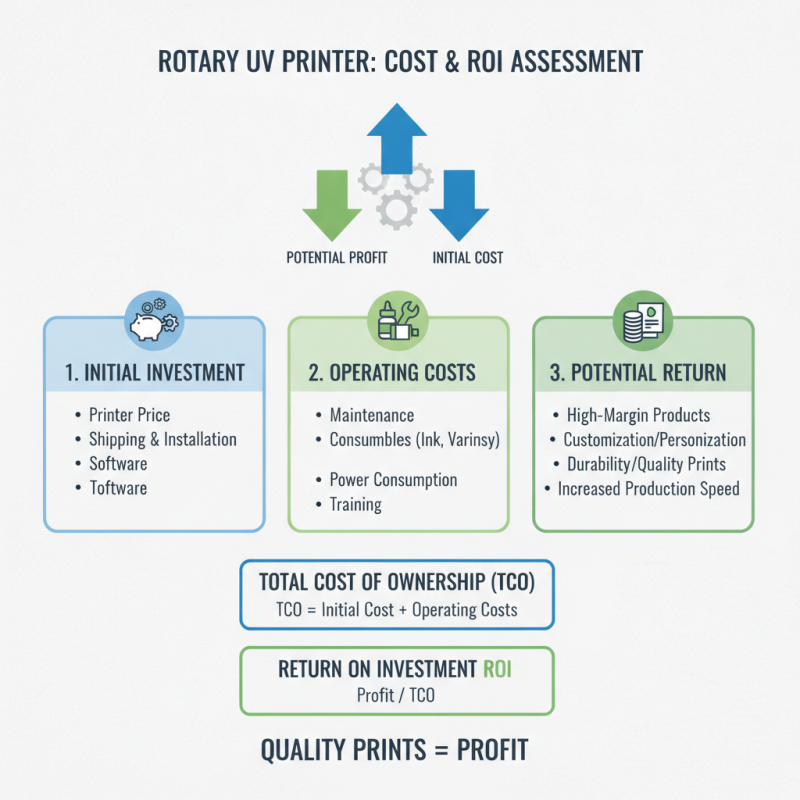
Additionally, consider the long-term costs and maintenance. A less expensive model may save you upfront but could lead to higher operational costs. Investing in a reliable Rotary UV Printer now can pay off in the long run. Make an informed decision by evaluating your choices carefully.
Understanding Your Printing Needs for Business Applications
Choosing the right rotary UV printer hinges on understanding your specific printing needs. Consider the materials you will print on. Are they rigid or flexible? This decision impacts the type of printer you need. For example, a printer designed for rigid substrates may not perform well on flexible materials. Analyzing your materials helps narrow down options effectively.
Next, think about the volume of prints you require. High-demand businesses might need a printer with faster output and higher durability. Lower volume printing allows for more flexibility but may not justify the investment in a high-end machine. Evaluate your current and projected printing needs. Will your output grow in the next few years? A miscalculation here could lead to purchasing equipment that either overwhelms or under-serves your business.
Lastly, contemplate your desired print quality. Fine details and vibrant colors are essential for some applications. Other projects may not require such precision. Sometimes, a lower-quality print could suffice. Being honest about your quality standards is vital for making a sound decision. Regularly revisiting your needs ensures that your choice aligns with your evolving business landscape.
Printer Performance Comparison
Evaluating Key Features of Rotary UV Printers
When choosing a rotary UV printer, evaluating key features is crucial. One significant aspect is the printing speed. Industry reports indicate that high-performance rotary UV printers can reach speeds of up to 100 square meters per hour. This efficiency is essential for businesses that require quick turnaround times. However, speed alone should not dictate your choice.
Print quality is another critical feature. Rotary UV printers utilize advanced technology to produce vibrant colors and sharp images. According to research, printers with a resolution of 1200 DPI or higher provide exceptional detail. Yet, it’s important to note that achieving such quality consistently can be challenging. Environmental factors, such as substrate type, can impact the final output.
Additionally, consider the versatility of your printer. A machine that can handle various materials, from wood to metal, gives your business an edge. While many models boast multi-substrate capabilities, some may struggle with certain surfaces. The right machine should balance performance with adaptability to meet diverse project requirements.
How to Choose the Best Rotary UV Printer for Your Business? - Evaluating Key Features of Rotary UV Printers
| Feature |
Description |
Importance |
| Print Resolution |
The clarity and detail of the print output, measured in DPI (dots per inch). |
High resolution is critical for quality output, especially for detailed graphics. |
| Print Speed |
The rate at which the printer can complete a print job, usually measured in square meters per hour. |
Essential for meeting high-volume demands efficiently. |
| Media Compatibility |
Types of materials the printer can handle, including various substrates. |
Broader media compatibility allows for diverse applications. |
| Ink Type |
The kind of ink used, such as UV-curable inks, which are known for durability. |
Durability and flexibility in printing applications are improved with quality ink. |
| Price |
The total cost of the printer including initial purchase and operating costs. |
Critical for budgeting and cost-effectiveness of the business. |
| Customer Support |
The availability and quality of technical support and service from the manufacturer. |
Good support is vital for minimizing downtime and resolving issues quickly. |
Comparing Different Brands and Models in the Market
When comparing rotary UV printers, several factors come into play.
Quality and speed are paramount. You want a machine that offers high-resolution prints without sacrificing production time.
Some models tend to lag behind during busy hours. This can be a problem if you're working on tight deadlines.
Different brands may excel in various aspects. For example, some might have better software integration while others focus on print durability.
Users often notice significant differences in color vibrancy and material compatibility. More expensive models might deliver superior results but could be overkill for smaller projects.
It's worth reflecting on your unique needs. Assess how different features align with your business goals.
Consider ease of use alongside technical specifications.
Sometimes, a well-rounded, mid-range model can serve you better than its high-end counterpart.
Being aware of both strengths and weaknesses helps in making an informed choice.
Considering Maintenance and Support Options for Rotary UV Printers
When selecting the best rotary UV printer, maintenance and support options are crucial to ensure seamless operations. Regular maintenance can significantly extend the printer's lifespan. According to a report by Smithers Pira, printers with robust support structures have a 30% lower failure rate. This highlights the need for businesses to prioritize long-term support plans.
Consider the availability of technical support. A responsive support team can greatly minimize downtime. Ideally, the provider should offer multiple contact options, including phone, email, and live chat. Evaluate the support team's response times before making a choice. Just a few minutes can make a difference in operational efficiency.
Tip: Always ask for maintenance guides. A detailed guide can help your staff troubleshoot minor issues. Investing in training is equally vital. Empowering your team reduces reliance on external support. Additionally, keep a log of all maintenance activities. This practice helps identify repeat issues and improves your operational strategy. Remember, regular check-ups can save costs in the long run.
While it's easy to focus solely on the features of a printer, neglecting support and maintenance can lead to costly setbacks. Be sure to weigh all options carefully. The right choice today can improve performance significantly tomorrow.