2026 Best A1 A2 Visual Positioning UV Printer Options for Your Business?
In recent years, the demand for A1 A2 visual positioning UV printers has surged, driven by the growth of personalized printing solutions. According to a market report from Smithers Pira, the global digital printing market is expected to reach $29 billion by 2026. Businesses are increasingly looking for technology that offers versatility and high-quality outputs.
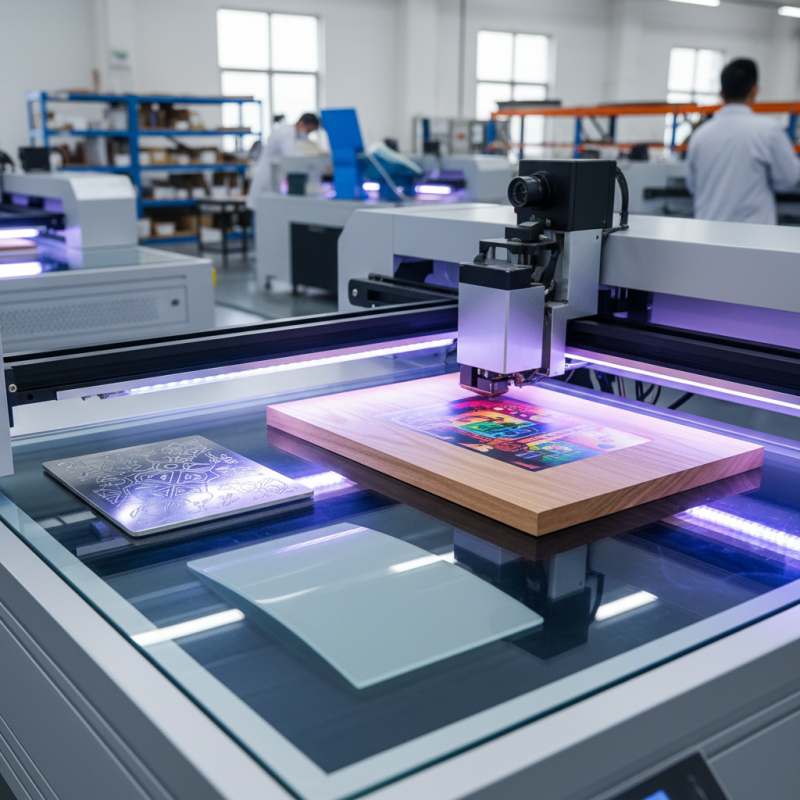
A1 A2 visual positioning UV printers provide an edge in this competitive landscape. They are known for their ability to print on a variety of substrates, including glass, metal, and wood. This opens new avenues for creative designs. However, the complexity of choosing the right printer can be daunting. There are numerous options, and prices vary widely.
Many businesses may find themselves overwhelmed by choices that do not align with their specific needs. Some may pick models purely based on cost, only to realize they lack features or capabilities needed for quality output. Understanding the features and limitations of each option is critical for long-term success. It is essential to reflect on how these printers can fit into your business strategy to ensure you make a wise investment.
Top Features to Consider in A1 A2 Visual Positioning UV Printers
When selecting an A1 A2 visual positioning UV printer, focus on crucial features. Print quality is paramount. Look for models that offer high resolution. This ensures sharp images and vibrant colors. You want prints that pop and draw attention. Additionally, consider the print speed. Fast production times can enhance productivity. However, rushing quality can lead to issues.
Another essential aspect is versatility. A good printer should handle various materials. Think about substrates like vinyl, wood, and glass. Each material can have unique challenges. Make sure the printer's feed mechanism is reliable. Inconsistent feeding can cause misalignment. It’s frustrating to deal with wasted materials and time.
Also, don’t overlook the software that comes with the printer. User-friendly interfaces can save time during setup. But they may lack advanced features. A little digging might reveal better alternatives. Always weigh your options. Consider your specific printing needs and how the printer fits. Remember, not every feature is essential. Choose wisely to avoid unnecessary costs.
2026 Best A1 A2 Visual Positioning UV Printer Options for Your Business? - Top Features to Consider in A1 A2 Visual Positioning UV Printers
| Model |
Max Print Size |
Resolution |
Print Speed |
Media Types |
Key Feature |
| Model A |
A1 Size (594 x 841 mm) |
1200 x 1200 dpi |
20 m²/h |
Paper, Vinyl, Wood |
High Color Saturation |
| Model B |
A2 Size (420 x 594 mm) |
1440 x 1440 dpi |
25 m²/h |
Acrylic, Metal, Glass |
Dual Ink System |
| Model C |
A1 Size (594 x 841 mm) |
720 x 720 dpi |
15 m²/h |
Textiles, Leather, PVC |
Eco-Friendly Ink Options |
| Model D |
A2 Size (420 x 594 mm) |
1080 x 1080 dpi |
30 m²/h |
Paper, Banner, Cardboard |
Automatic Material Recognition |
Comparative Analysis of Leading A1 A2 UV Printer Brands for 2026
In 2026, the A1 and A2 UV printer market is evolving rapidly. A recent industry report states that the demand for UV printing is projected to grow at a CAGR of 9.5% through 2028. This growth underscores the importance of selecting the right printer for specific business needs.
When comparing leading brands, several factors emerge as crucial. Speed and print quality often top the list. Many A1 A2 UV printers offer speeds ranging from 30 to 60 square meters per hour. Image clarity remains essential, with resolutions hitting up to 1440 dpi, enhancing photo reproduction. However, costs can vary significantly. Some machines may seem affordable initially but incur steep maintenance fees.
Durability and ease of operation are also vital. Businesses require printers that withstand heavy daily use without frequent breakdowns. Moreover, operators may find some models easy to learn, while others pose a steep learning curve. Choosing the right model isn't straightforward. It's essential to weigh all these factors, balancing budget with quality and functionality.
Comparative Analysis of A1 A2 Visual Positioning UV Printers for 2026
Cost-Effectiveness: Evaluating Price vs. Performance in UV Printers
When considering a UV printer, price versus performance is crucial.
Businesses need to balance cost with quality. A lower price might seem attractive but may sacrifice print quality.
Always evaluate the specifications if you want the best for your investment.
Tip: Look for user reviews focusing on performance.
They provide real-world insights that can guide your decision.
Check if the printer meets your specific needs in production and speed.
Analyze your business's unique needs. A powerful printer may be overkill for smaller projects.
Some printers excel in speed, while others shine in detail.
Knowing your goal helps in selecting the right model.
Tip: Test samples before purchasing.
Print on various materials to assess quality.
It aids in understanding how a printer performs under actual working conditions.
Don't ignore maintenance costs as they can add up quickly.
User Reviews and Experiences with A1 A2 UV Printers
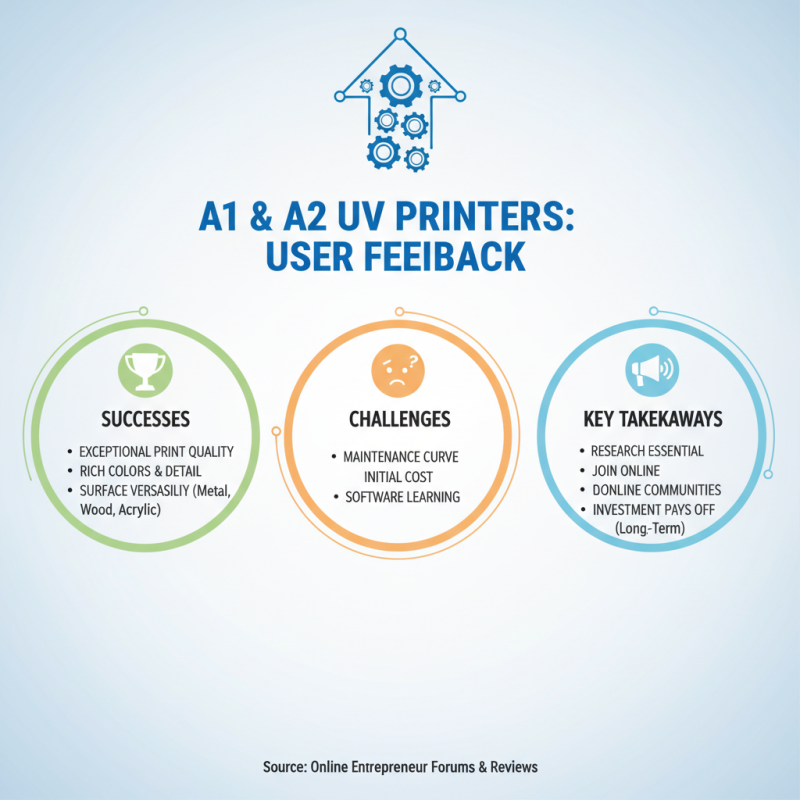
When investing in A1 A2 UV printers, user feedback is crucial. Many entrepreneurs share their experiences online. They highlight both successes and challenges faced during use. For example, print quality is often praised, showing vibrant colors and intricate details. Users note the versatility in printing on various surfaces, making it appealing for different business needs.
However, not all experiences are positive. Some users report issues with software compatibility. They express frustration with learning curves associated with new technology. Additionally, maintenance requires time and effort. A few also mention the printer's size as a limitation for small workspaces. These reflections are essential when considering your options.
Many recommend seeking out community forums for support. Engaging with other users can provide valuable insights. It's essential to weigh both positive and negative experiences before making a purchase. Decisions should be informed by real-world applications, ensuring the printer aligns well with specific goals and expectations.
Future Trends in A1 A2 Visual Positioning UV Printing Technology
The future of A1 A2 visual positioning UV printing technology holds exciting possibilities.
Innovations are emerging that enhance print quality and efficiency.
The integration of smart technology can streamline workflows.
Businesses may find it easier to automate tasks that once required manual input.
This shift could save time and reduce errors.
Moreover, sustainability is becoming a key focus.
Many companies now seek eco-friendly inks and processes.
This trend reflects growing consumer demand for environmentally responsible options.
Implementing such practices can attract a loyal customer base.
Yet, navigating these changes can be challenging for some businesses.
Questions arise about cost-effectiveness and the learning curve involved.
Additionally, advancements in software could revolutionize design and printing processes.
Augmented reality and machine learning are beginning to play roles.
These technologies can improve accuracy in visual positioning.
However, not all businesses may be ready to adapt.
It requires investment in new equipment and training.
Embracing change is crucial, but it can cause uncertainty. Each step forward must be approached with careful consideration.