Inquiry
Form loading...

2026 Top Large UV Flatbed Printers for Global Buyers

Global buyers are entering a more demanding large-format printing market. A Large Uv Flatbed Printer must deliver accurate color, stable registration, and dependable uptime. It should also handle rigid media, corrugated board, acrylic, glass, wood, and aluminum with minimal setup changes. These details affect real production costs more than impressive brochure speeds.

Industry reports support this shift toward digital, customized production. Smithers’ The Future of Digital Print for Packaging to 2028 identifies continued growth in short-run, versioned, and on-demand packaging applications. FESPA’s Print Census 2023 also reports strong interest in digital technology, automation, and more sustainable workflows among print service providers. These findings matter for buyers comparing printers across regions. Energy consumption, ink efficiency, software compatibility, and local technical support deserve equal attention.

This guide evaluates leading large UV flatbed printers for 2026, using practical buying criteria rather than marketing claims alone. We examine printhead technology, curing systems, maximum substrate thickness, bed size, color configuration, automation, and after-sales service. Actual results vary.

A faster machine is not always better. Some systems need skilled operators and careful calibration. Others sacrifice peak resolution for throughput. Buyers should request live samples, maintenance records, warranty terms, and total cost estimates before signing an order. Public data can also be incomplete, especially for regional service response and long-term component availability. That weakness deserves open discussion. The best choice depends on application volume, substrate mix, labor capability, and the buyer’s local operating conditions.
2026 Top Large UV Flatbed Printers for Global Buyers

What Large UV Flatbed Printers Are and How They Work

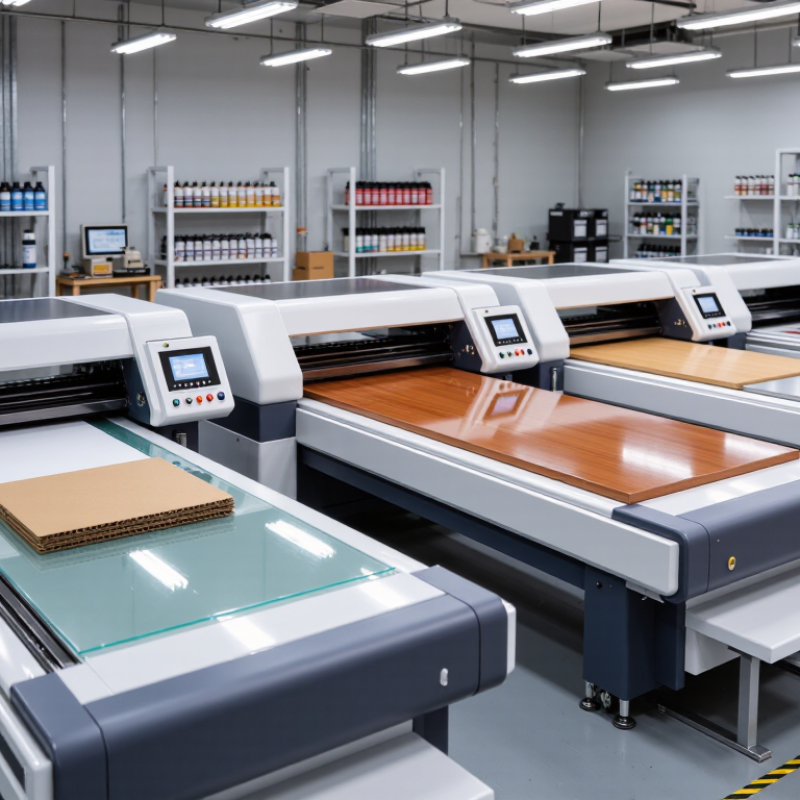
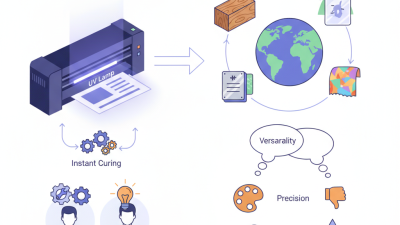
Large UV flatbed printers are industrial digital systems for rigid materials. They print directly onto boards, glass, metal, wood, acrylic, and coated panels. Unlike roll-to-roll machines, they hold sheets on a flat vacuum table. The print carriage moves across the surface. Piezoelectric printheads place tiny ink droplets, while ultraviolet LEDs cure them almost immediately. No long drying room is needed.

The workflow starts with artwork preparation and substrate inspection. A RIP software controls color, layer order, and ink volume. Operators may print white ink beneath colors or add a varnish layer. This creates opacity, texture, or gloss. However, adhesion still depends on surface energy, cleaning, and correct curing. The process is not flawless. White ink can settle, and excessive lamp energy may affect sensitive materials. Practical testing remains essential.

Market data explains the growing interest. Grand View Research valued the global UV-curable inks market at approximately USD 1.8 billion in 2023 and projected continued growth through 2030. Smithers’ The Future of Digital Printing to 2029 also highlights expanding digital applications for customized and short-run production. Buyers should examine usable table size, automatic height detection, vacuum zoning, color calibration, and service response. Energy use matters too. A larger table does not always mean higher productivity. Experienced operators measure finished sheets per hour, not only the advertised print speed.

Key Criteria for Evaluating Large UV Flatbed Printers in 2026

2026 Top Large UV Flatbed Printers for Global Buyers

Key Criteria for Evaluating Large UV Flatbed Printers in 2026

Choosing a large UV flatbed printer requires more than comparing listed speed. In production trials, bed flatness affects alignment across wide panels. Measure registration at the center and corners. A small deviation can distort tiled graphics. Do not trust one impressive sample. Ask for repeated prints on acrylic, aluminum, glass, and corrugated board. Real samples matter. Check the vacuum table, too. Weak suction may cause raised edges, uneven curing, or visible banding. Printhead height adjustment should feel precise, not loose.

Ink adhesion, curing stability, and color consistency deserve close testing. Rub printed areas after curing and inspect fine text under direct light. Some surfaces need primers, adding labor and drying time. Confirm whether the printer supports white and clear layers without slowing production excessively. Speed claims often use simple artwork and limited ink coverage. They may not match factory conditions. Software should handle nesting, calibration, and repeat orders without complicated workarounds. Remote diagnostics are useful, but local technical support remains important. Global buyers should verify voltage, operating environment, spare-parts access, training, and safety documentation. Total cost includes maintenance, ink waste, energy use, and downtime. I would also request a three-day test run. It may reveal issues that a polished demonstration hides.

Top Large UV Flatbed Printer Categories for Global Buyers

Large UV flatbed printers serve different production needs, so global buyers should compare categories before comparing prices. A professional flatbed category suits signage, interior panels, acrylic sheets, and short-run displays. It usually offers a stable vacuum bed, accurate registration, and white ink support. Some models also add clear ink for textured effects.

Production flatbeds target print shops handling higher daily volumes. They commonly use larger tables, faster curing systems, and multiple printheads. Dual-table designs can load one sheet while another is printing. This reduces idle time. However, faster output may increase ink use, maintenance demands, and operator training requirements. Those costs are easy to underestimate.

Industrial flatbed printers are built for demanding schedules and thicker materials. They may support automated loading, heavier media, and continuous workflow control. Hybrid flatbed categories combine rigid-board printing with roll-fed production. They suit buyers serving both packaging displays and flexible signage. Yet, hybrid systems may sacrifice some flatbed speed or table convenience.

I would not select a category from speed alone. Visit a working installation if possible. Test your actual materials, including warped boards, dark acrylic, and uneven foam panels. Check color consistency across a full sheet. Ask about local service response, spare parts, ventilation, and operator training. A technically impressive machine can still become a poor investment when support is distant. My own preference is practical: match the printer to weekly workload, material thickness, floor space, and realistic labor capacity. Perfect specifications rarely exist.

Comparing Print Quality, Productivity, Materials, and Operating Costs

2026 Top Large UV Flatbed Printers for Global Buyers

Large UV flatbed printers now serve sign shops, packaging plants, furniture makers, and industrial decorators. Print quality depends on more than resolution. Accurate calibration, stable ink flow, and controlled curing help produce sharp text and smooth skin tones. A test file should include fine lines, solid blocks, gradients, and white ink. Inspect the output under daylight and angled light. Small defects become obvious there.

Productivity requires a realistic view of speed. A machine may advertise a high maximum rate, yet frequent cleaning, loading, or curing adjustments can reduce daily output. Ask for timed samples using the materials you actually sell. Rigid boards, acrylic sheets, glass, wood, and coated metal can behave differently. Some surfaces need primers or special pretreatment. That adds labor and waiting time.

Operating cost includes ink, printheads, electricity, maintenance, waste, and operator training. White ink can improve visual impact, but it often needs careful circulation and regular use. Neglected systems may create avoidable service problems. Energy-efficient curing is valuable in long production cycles, though purchase price should not dominate the decision. A cheaper printer can become expensive when downtime interrupts delivery schedules. Even experienced buyers can overestimate output. A small production trial is wiser than relying on brochure figures.

Global Purchasing Factors: Compliance, Support, Shipping, and Maintenance

Global purchasing begins with compliance, not the machine price. Buyers should request current safety certificates, ink Safety Data Sheets, and regional conformity documents. Check electrical requirements, waste handling rules, and local restrictions on volatile compounds. ISO 12647-8 supports standardized validation for digital prints. It does not replace national safety approval. That distinction matters.

Support can decide whether a large UV flatbed earns money or collects dust. FESPA’s 2023 Print Census reported that 72% of surveyed printers expected sales growth. Growth increases pressure on uptime. Ask for technician response times, remote diagnostics, operator training, and local spare-parts stock. Get these promises in writing. A friendly sales call is not a service contract.

Shipping needs more than freight quotes. Confirm crate dimensions, gross weight, shock protection, insurance, customs documents, and installation responsibility. Port delays can damage schedules. Maintenance planning should include daily nozzle checks, white-ink circulation, lamp inspection, and controlled workshop humidity. Smithers valued digital packaging print at $22.7 billion in 2023 and forecasts $36.2 billion by 2028, showing strong digital-print momentum. Yet market growth does not guarantee smooth ownership. A cheaper machine may demand costly downtime, overlooked consumables, or repeated technician visits. That is an uncomfortable calculation.

2026 Top Large UV Flatbed Printers for Global Buyers - Global Purchasing Factors: Compliance, Support, Shipping, and Maintenance

Printer Category Typical Printable Area Typical Media Thickness Common Ink Configuration Indicative Production Speed Electrical Requirement Best-Fit Applications Indicative Equipment Weight Global Purchasing Considerations
Large Format 4×8 ft Flatbed 1,220 × 2,440 mm Up to approximately 50 mm, depending on vacuum-table design CMYK, light colors, white, and optional clear or primer channels Approximately 20–45 m²/h in production modes Normally 220–240 V single-phase; verify current and circuit protection Rigid signage, display boards, acrylic, foam board, PVC, glass, and short-run packaging Approximately 800–1,500 kg Check door clearance, floor loading, vacuum zones, crate dimensions, and local electrical certification.
Large Format 5×10 ft Flatbed 1,550 × 3,050 mm Up to approximately 50–100 mm, subject to carriage clearance CMYK plus white; optional light colors, clear, primer, or spot-color channels Approximately 30–60 m²/h in production modes 220–240 V or 380–415 V, depending on configuration and region Large signage, furniture panels, interior décor, industrial graphics, and architectural boards Approximately 1,200–2,200 kg Confirm three-phase availability, unloading equipment, installation access, and spare-part lead times.
Extra-Large 6×12 ft Flatbed 1,830 × 3,660 mm Up to approximately 50–100 mm, depending on the table and material-holding system CMYK, white, light colors, and optional clear, primer, or varnish channels Approximately 40–80 m²/h in production modes Usually 380–415 V three-phase for industrial installations High-volume signage, exhibition graphics, panels, décor production, and sheet-based manufacturing Approximately 1,800–3,500 kg Budget for reinforced flooring, professional rigging, larger crating, and on-site commissioning.
Roll-to-Roll and Flatbed Hybrid Up to approximately 1,600–2,500 mm wide; flatbed length varies Rigid media generally up to 50 mm; flexible media handled by roll unit CMYK, white, and optional light, clear, or primer channels Approximately 25–70 m²/h, depending on media and print mode 220–240 V single-phase or 380–415 V three-phase Rigid boards, banners, self-adhesive films, wallpapers, textiles, and mixed-volume work Approximately 1,000–2,500 kg Evaluate media-tension control, take-up capacity, changeover time, and compatibility with local substrates.
Industrial Multi-Zone Flatbed Approximately 1,600 × 3,200 mm to 2,500 × 3,100 mm Approximately 50–100 mm, with optional jigs or special-height configurations Four-color through extended-color systems with white, clear, and primer options Approximately 60–120 m²/h in high-speed production modes Normally 380–415 V three-phase; compressed air or dedicated extraction may be required Continuous signage production, décor manufacturing, industrial panels, and high-volume contract printing Approximately 2,500–5,000 kg Prioritize service response time, redundant vacuum zones, preventive-maintenance plans, and operator training.

Global Purchasing Factor Checklist

Evaluation Area What Buyers Should Request Practical Acceptance Criteria Risk if Not Verified
Regulatory Compliance Declaration of conformity, electrical test records, safety documentation, user manual, and applicable market markings. Documentation matches the exact machine configuration and destination market; markings are supported by technical files. Customs delays, workplace-safety issues, insurance concerns, or inability to place the machine into service.
Ink and Chemical Compliance Safety Data Sheets, technical data sheets, VOC information, curing requirements, and restricted-substance declarations. Ink documentation is available in the buyer’s language and is suitable for the intended workplace and substrate applications. Unexpected ventilation costs, substrate adhesion problems, worker-exposure concerns, or non-compliant output.
Technical Support Remote-support hours, escalation process, installation scope, training hours, and local technician availability. Written response-time targets, documented commissioning procedure, and access to trained service personnel. Long downtime, inconsistent color quality, preventable printhead damage, and higher operating costs.
Shipping and Installation Packed dimensions, gross weight, center of gravity, lifting points, Incoterms, insurance, and delivery schedule. Site survey completed before shipment; unloading, rigging, placement, leveling, and commissioning responsibilities are written into the contract. Damage in transit, failed delivery, extra crane charges, installation delays, or warranty disputes.
Preventive Maintenance Daily, weekly, and monthly maintenance schedule; cleaning materials; filter requirements; and printhead replacement procedure. Operators receive a documented checklist and can obtain approved consumables without excessive lead times. Nozzle loss, ink-system blockage, poor white-ink circulation, unplanned downtime, and shortened component life.
Spare Parts and Warranty Warranty exclusions, recommended spare-parts list, stock locations, lead times, and consumable coverage. Critical parts have defined availability targets and the contract clearly separates consumables from warranty-covered components. Extended downtime and unexpected repair expenses during the first years of ownership.
Total Cost of Ownership Equipment price, freight, duties, installation, ink consumption, electricity, maintenance, software, labor, and disposal costs. Compare cost per square meter using the same substrate, ink coverage, print mode, waste rate, and annual production volume. A low purchase price may result in a higher five-year operating cost.

Data note: The figures above are representative 2026 market ranges for large-format UV flatbed configurations. Actual speed, thickness, power, weight, compliance status, and total cost depend on the exact machine configuration, ink system, destination country, substrate, and installation conditions. Buyers should validate all specifications through a signed technical quotation and site survey before purchase.