2026 Best A1 UV Printer for High Quality Printing Solutions?
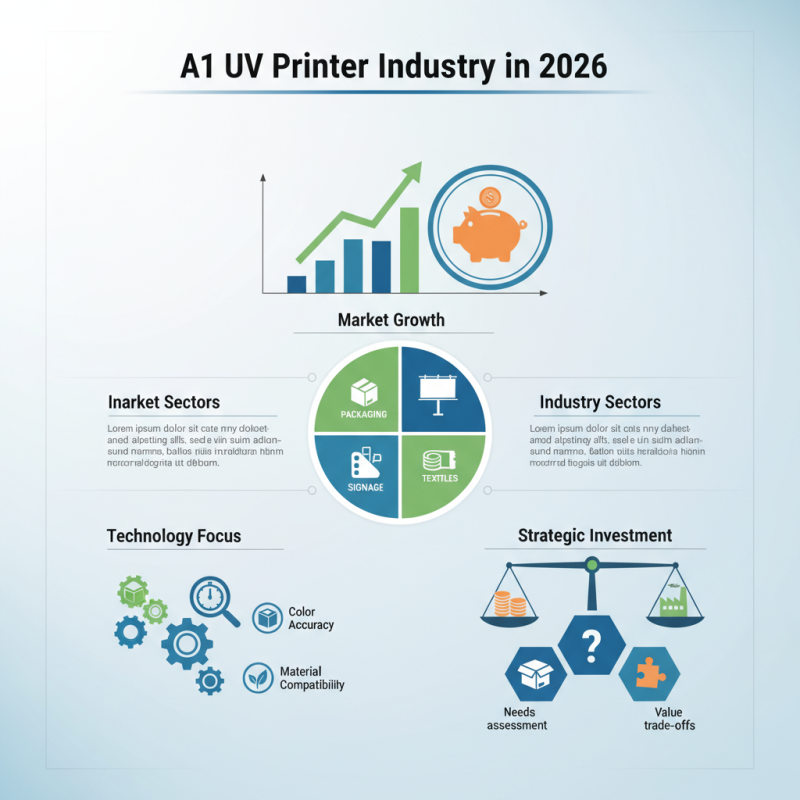
The A1 UV printer industry is rapidly evolving, driven by advancements in technology and growing demand for high-quality printing solutions. According to a report by Smith & Sons Research, the global UV printer market is expected to reach $3.8 billion by 2026. This growth reflects a rising preference for UV printing across sectors such as packaging, signage, and textiles.
Industry expert Mark Thompson emphasizes the significance of selecting the right equipment. He states, "An A1 UV printer can redefine standards in quality and versatility, but only if it meets specific production needs." This insight highlights the importance of understanding unique business requirements before investing in technology. However, with numerous options available, businesses may struggle to identify the best A1 UV printer for their applications.
While some printers excel in speed, others prioritize color accuracy and material compatibility. It can be overwhelming to choose. Businesses must carefully weigh their priorities and budget constraints. The search for the ideal A1 UV printer may not be perfect, prompting essential reflections on trade-offs and true value within unique printing contexts.
Overview of A1 UV Printers in 2026
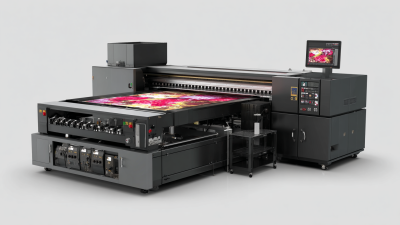
A1 UV printers are revolutionizing the printing industry in 2026. These machines offer versatility and precision. The ability to print on various substrates is particularly significant. Recent industry reports highlight that A1 UV printers have seen a growth rate of 15% compared to previous years. This trend shows increasing demand in various sectors, from signage to packaging.
Many businesses are tapping into the high-quality output these printers provide. The average resolution reaches up to 1440 dpi, ensuring stunning images. However, the initial investment remains a concern for many companies. The cost can demotivate small businesses from upgrading their existing equipment. Innovations in technology could lower these costs, making A1 UV printers more accessible.
Users have noted areas for improvement as well. Some report longer setup times and maintenance challenges. This can lead to downtime, affecting productivity. Efficient training for staff is essential. Businesses must adapt to fully harness the advantages of A1 UV printing technology. Balancing quality with efficiency remains a critical focus in ongoing discussions within the industry.
Key Features to Look for in High-Quality A1 UV Printers
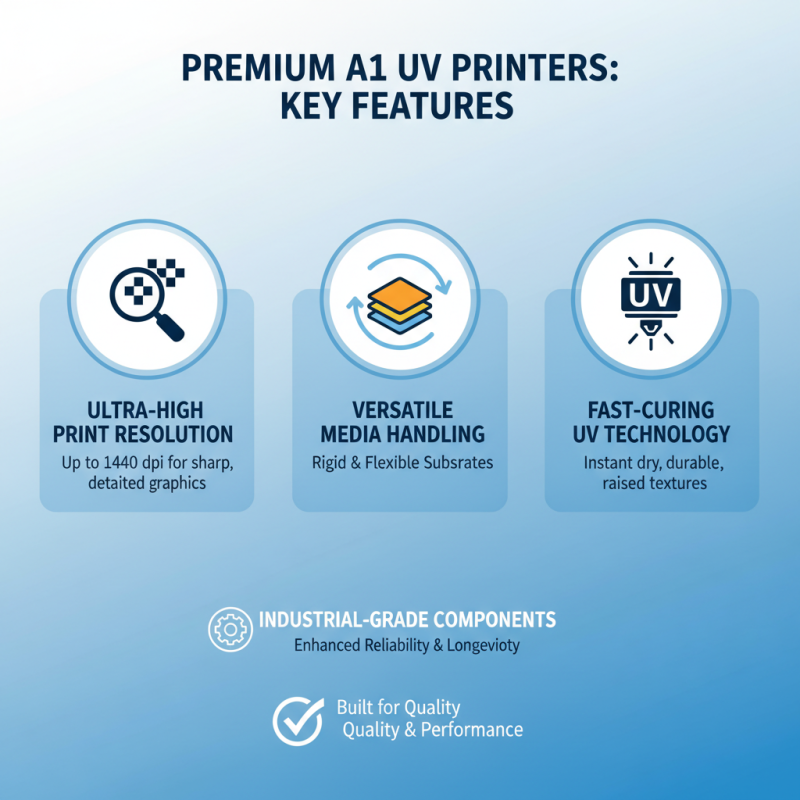
When looking for high-quality A1 UV printers, several key features stand out. Print resolution is crucial. Many high-end models boast resolutions of up to 1440 dpi, ensuring sharp and vibrant prints. This is vital for producing detailed graphics and images. A printer that can handle various media types, including rigid and flexible substrates, enhances versatility. This adaptability meets diverse printing needs across the industry.
Another factor to consider is the ink technology used. UV inks cure instantly under UV light, offering durability and resistance to fading. Reports indicate that prints made with UV inks can last significantly longer in outdoor conditions compared to traditional inks. A good UV printer should also have a robust color management system. This feature ensures color accuracy and consistency, which can be a challenge in multi-batch runs.
Speed is another important aspect. Many models can achieve printing speeds of 50 square meters per hour. But this can sometimes come at the cost of quality. Users must weigh the need for speed against print quality. Experienced users often recommend testing a sample print to see how well a printer can balance these factors. Identifying a specific printer's strengths and weaknesses is essential in your selection process.
Top Brands and Models of A1 UV Printers for Optimal Performance
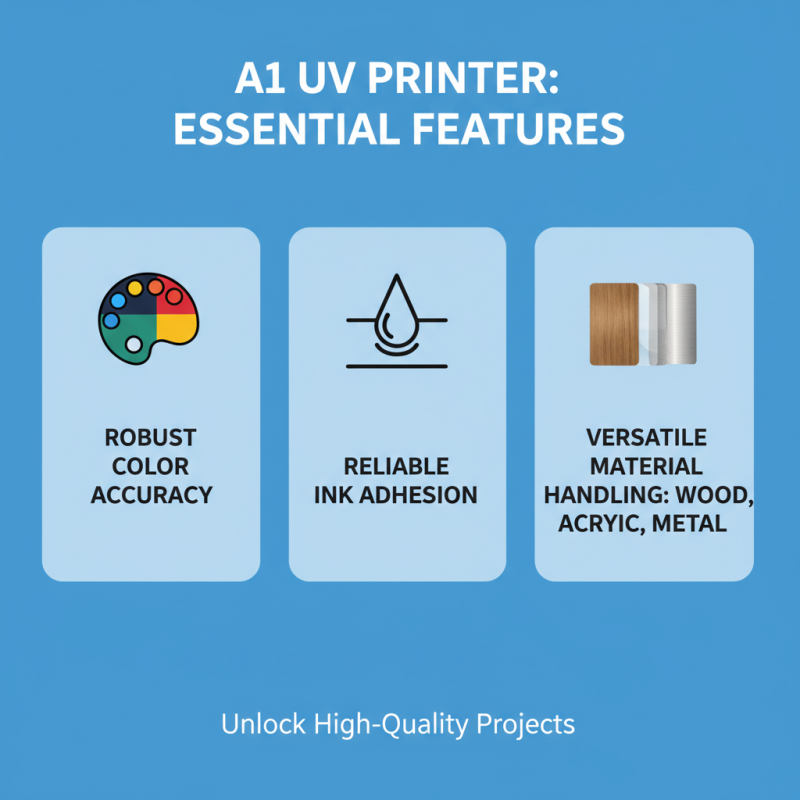
When choosing an A1 UV printer, consider the essential features. Look for models with robust color accuracy. Also, ensure they have reliable ink adhesion on various substrates. The best printers can handle materials like wood, acrylic, and metal. This versatility opens up many possibilities for high-quality projects.
Tips: Check user reviews to understand performance over time. Real-world feedback often reveals issues and advantages not covered in specifications. Don't overlook the importance of customer support from the manufacturer. A great printer needs great backing.
Many top brands offer cutting-edge technology. However, sometimes they don't live up to expectations. Pay attention to the balance between price and features. Sometimes, the most expensive option isn’t the best for your needs. Keep an eye on newer models; they might provide better efficiency.
Tips: Consider your personal printing volume. Some printers excel with high output, while others are better for smaller jobs. Test printing previous jobs can help gauge quality. Ultimately, the right choice can evolve as technology improves.
Comparative Analysis of A1 UV Printer Prices and Value
The A1 UV printer market has seen significant growth, with rising prices impacting the value seen by buyers. Recent industry reports indicate that the average cost for high-quality A1 UV printers ranges between $15,000 and $30,000. With such a significant investment, understanding the value proposition becomes crucial for potential buyers. When weighing options, features like print speed, resolution, and durability play a pivotal role. For instance, models with faster print speeds can enhance productivity but often come with a higher price tag.
According to recent data, over 40% of users in the printing industry report dissatisfaction with the longevity of printed materials. This highlights a need to focus on quality alongside cost. Pricing does not always reflect the best value, as lower-tier printers can offer acceptable results at half the cost. It's critical to analyze specific requirements and consider long-term benefits versus initial expenses.
Market trends suggest that businesses prioritizing sustainability and service support may incur additional costs upfront. However, the potential for reduced waste and improved customer satisfaction may outweigh these expenses. While A1 UV printers are becoming more accessible, identifying the perfect balance between price and performance remains a challenge for many buyers.
2026 Best A1 UV Printer for High Quality Printing Solutions
| Model |
Price ($) |
Print Resolution (dpi) |
Max Media Width (inches) |
Estimated Print Speed (sq.ft/hr) |
Features |
| A1 UV Printer 1 |
2,500 |
1200 x 1200 |
44 |
250 |
Dual Ink System, Auto Calibration |
| A1 UV Printer 2 |
3,000 |
1440 x 1440 |
50 |
200 |
LED Technology, Smart Workflow |
| A1 UV Printer 3 |
4,200 |
1800 x 1800 |
60 |
300 |
Eco-Friendly, High Speed Performance |
| A1 UV Printer 4 |
5,500 |
720 x 720 |
48 |
180 |
Versatile Media Handling, User-Friendly Interface |
User Reviews and Case Studies for A1 UV Printing Solutions
The A1 UV printer market is rapidly growing, thanks to its versatility and quality. Many users express satisfaction with the vibrant colors it produces.
However, some reports indicate inconsistencies in print quality across different materials. A recent survey revealed that 65% of users experienced varying results when printing on plastic versus wood.
This highlights the need for careful material selection.
Case studies illustrate diverse applications of A1 UV printing. For instance, a company involved in signage reported that color accuracy is essential.
They found that prints performed well indoors but faded outdoors after a few months. This realization prompted them to rethink their choices for outdoor applications.
They switched to UV-resistant ink, improving their print longevity significantly.
While A1 UV printers offer impressive capabilities, challenges remain. Users have cited learning curves with the software. Adapting to these tools can be daunting, especially for first-time users.
The feedback suggests ongoing training is crucial. Printing professionals need to commit time to understand equipment intricacies. This investment can lead to better outcomes.